
Mahjong strategy tips
Practical tips for Hong Kong tables. Beginner first, then intermediate.
New to the game? Read the rules first. Fan values follow our scoring page. That is one common rule set: 3-fan minimum, 10-fan limit.
Three habits that win
- Know your fan before you claim.
- Keep shapes that accept many tiles.
- Watch every discard, not just yours.
Beginners lose most by feeding wins. Avoiding that alone saves money.
What to discard first
Throw the least useful tile. A rough order:
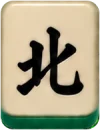
- Lone winds worth no fan.
- Lone terminals: 1s and 9s.
- Lone 2s and 8s.
- Lone middle tiles, 3 to 7.
- Broken pieces of weaker shapes.
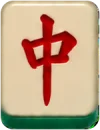
Your seat wind scores. The prevailing wind scores. Each pong is 1 fan. So are dragon pongs. Keep pairs of them.
A lone dragon is borderline. Keep it a turn or two. Throw it once one is discarded.
Throw useless honors early. Late, they get dangerous.
Keep flexible shapes
Good shapes wait on many tiles. Each tile has four copies.
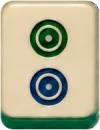
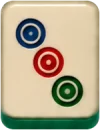
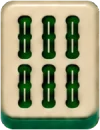
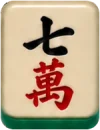
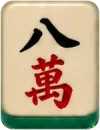
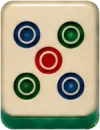 Two-sided. Waits on 3 or 6. Up to 8 tiles.
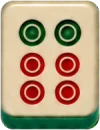 Closed. Waits on 5 only. Up to 4 tiles.
 Edge. Waits on 3 only. Up to 4 tiles.
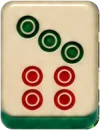 Pair. Waits on 7. Only 2 left.
- Prefer two-sided over edge or closed.
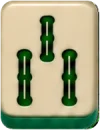
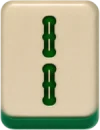
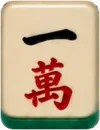
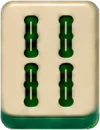 accepts any tile 2 to 7. Keep it.
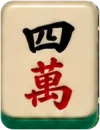
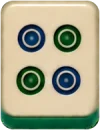
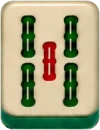
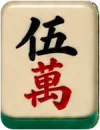 becomes a pong or a run. Keep it.
- Keep one pair as your eyes. Two or three pairs: fine early.
- Five or more pairs is slow. Then aim for all pongs.
Breaking a shape? Break edge or closed shapes first. Keep the two-sided one.
Plan for 3 fan
Many tables need 3 fan. Complete hands with less can’t win. Pick a route early.
| Route | Fan | Notes |
|---|---|---|
| Mixed one suit (混一色) | 3 | One suit plus honors. Easy to see. |
| All pongs (對對糊) | 3 | Good with many pairs. Claim freely. |
| Pure one suit (清一色) | 7 | One suit only. Others notice fast. |
| Dragon pong | 1 each | The surest single fan. |
| Seat or prevailing wind pong | 1 each | East in East round: 2. |
| Concealed hand | 1 | No claims before the winning tile. |
| Self-draw | 1 | Not in your control. |
| All chows (平糊) | 1 | Four chows and a pair. |
Flowers add fan too. Here they don’t count toward it. Some tables let them. Ask first.
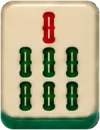
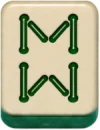
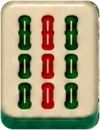
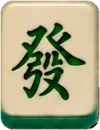
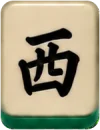
More patterns: winning hands.
When to claim, and when not
A claim speeds you up. It also costs something:
- You lose the concealed hand fan.
- Others see your suit and sets.
- You have fewer tiles to rearrange.
Claim when:
- The pong scores fan. Dragons, your winds.
- Your route already allows claims. All pongs, one suit.
- The claim makes you ready.
- Your fan is already safe.
Don’t claim when:
- The claim leaves you fanless.
- Your concealed hand is nearly ready.
- It’s early and you’re weak.
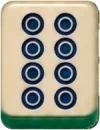
Left player discards 4 dots. Chow it? Only if your fan is safe.Chows only come from your left. Pongs come from anyone. A pong skips players before you.
Read other players’ discards
- No bamboo from a player? They may collect bamboo.
- Several exposed sets in one suit? Expect one suit.
- Exposed dragon pongs? Hold the third dragon.
- Early discards show unneeded tiles.
- Late middle-tile discards often mean ready.
- Sudden claims can mean nearly ready.
These are hints, not proof.
Count visible tiles
Each tile has four copies. Count what you can see:
- Your own hand.
- All discards.
- All exposed sets.
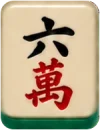 Three already visible. Only one 6 left.
Waiting on that 6? Change your wait. Prefer two-sided waits on live tiles.
Count your outs before committing.
Safe tiles and defense
Feed a win and you pay. So every discard carries risk. Most tables allow winning on anything. Even one the winner discarded earlier.
Safer tiles, roughly safest first:
- An honor with three copies visible. Only thirteen orphans needs it.
- A recent discard nobody claimed.
- Honors already discarded once.
- Terminals: 1s and 9s.
- 2s and 8s.
- Middle tiles, 3 to 7. Most dangerous.
An undiscarded tile is live (生張). Late in the hand, avoid them.
Watch any one-suit player. Don’t feed that suit late.
When to give up a hand
Fold when all are true:
- The wall is getting short.
- You are two+ tiles from ready.
- Someone shows signs of being ready.
Folding means discarding only safe tiles. Break pairs and runs if needed. A drawn hand costs nothing.
Ready with good fan? Don’t fold. Push it.
Common beginner mistakes
- Building a hand with no fan.
- Claiming every chow offered.
- Holding lone honors too long.
- Keeping edge waits over two-sided ones.
- Watching only your own tiles.
- Discarding live middle tiles late.
- Winning short of the minimum: a false win.
- Wrong tile count after a kong. Draw the replacement.
- Calling too slowly. A late call can lose.
Table words are in the glossary. Tile names: see tiles.
FAQ
How do you win at mahjong?
Make four sets and a pair. Reach the minimum fan. Feed others as little as possible.
What tiles should you discard first?
Lone honors worth no fan. Then lone 1s and 9s.
Is mahjong luck or skill?
Both. Luck decides single hands. Skill shows over many games.
When should you call pong?
When it scores fan. Or fits your route. Don’t break a concealed ready hand.
How do you get 3 fan?
One suit plus honors gives 3. All pongs gives 3. Dragon pongs add 1 each.
What is a safe tile?
One unlikely to complete a hand. Usually one already discarded.
Should you keep honor tiles?
Keep pairs that can score fan. Throw lone useless honors early.
What is the best mahjong strategy?
Plan fan early. Keep shapes flexible. Defend when behind.