
How to play mahjong: Hong Kong rules
Four players. 13 tiles each. Draw one, discard one. Make four sets and a pair. First complete hand wins.
The game in brief
- Players: four.
- Tiles: 144.
- Hand size: 13 tiles.
- Turn: draw one, discard one.
- Goal: four sets and a pair.
- Winning hand: 14 tiles.
- Minimum to win: 3 fan.
- Play direction: counterclockwise.
Sets have three or four tiles.
| Set | Chinese | What it is | Example |
|---|---|---|---|
| Chow | 上 (soeng) | Three in a row, one suit. | 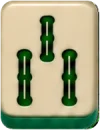 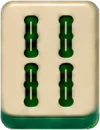 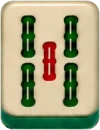 |
| Pong | 碰 (pung) | Three identical tiles. | 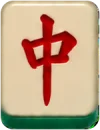 |
| Kong | 槓 (gong) | Four identical tiles. | 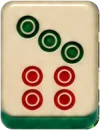 |
| Pair (eyes) | 眼 (ngaan) | Two identical tiles. | 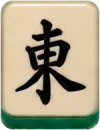 |
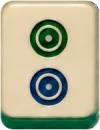

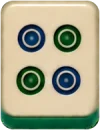
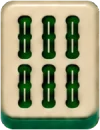
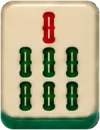
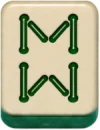
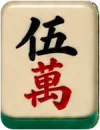
The tiles
| Group | Tiles | Copies | Total |
|---|---|---|---|
| Dots | 1 to 9 | 4 each | 36 |
| Bamboo | 1 to 9 | 4 each | 36 |
| Characters | 1 to 9 | 4 each | 36 |
| Winds | East, South, West, North | 4 each | 16 |
| Dragons | Red, green, white | 4 each | 12 |
| Flowers | Plum, orchid, chrysanthemum, bamboo | 1 each | 4 |
| Seasons | Spring, summer, autumn, winter | 1 each | 4 |
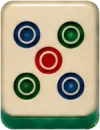
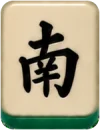
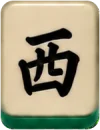
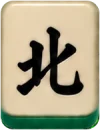
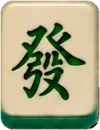
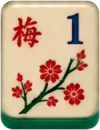
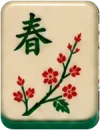
Winds and dragons are honor tiles. Honors never form chows. Flowers and seasons are bonus tiles. They never form sets.
Every tile, with names: mahjong tiles.
Seats, winds and the dealer
Each seat has a wind.
| Seat | Where | Plays |
|---|---|---|
| East (dealer) | Any seat | First |
| South | East’s right | Second |
| West | Opposite East | Third |
| North | East’s left | Fourth |
The dealer is always East. Cantonese: 莊家, zong gaa. Play passes to the right. That is counterclockwise.
There is also a prevailing wind. It starts as East. It changes each round. Your seat wind pong scores. So does a prevailing wind pong.
Choosing seats and first dealer: setup guide.
Building the wall and dealing
- Shuffle all tiles face down.
- Each player builds 18 stacks.
- Stacks are two tiles high.
- Push the walls into a square.
- The dealer rolls the dice.
- The total picks where to break.
- Everyone gets 13 tiles.
- The dealer gets a 14th.
- Flowers are set aside and replaced.
Full steps with counting: how to set up mahjong.
Taking a turn
The dealer starts. They discard one tile. They don’t draw first.
Every later turn has two steps:
- Draw one tile from the wall.
- Discard one tile face up.
Discard into the middle. Say the tile’s name aloud. End each turn holding 13 tiles. Kongs and flowers don’t count.
You may skip the draw. Instead, claim the last discard.
Claiming a discard
Any discard can be claimed. Claim it before the next draw.
| Claim | You hold | Who may claim |
|---|---|---|
| Chow 上 | Two tiles of the run | Next player only |
| Pong 碰 | Two matching tiles | Anyone |
| Kong 槓 | Three matching tiles | Anyone |
| Win 食糊 | A hand it completes | Anyone |
After a claim:
- Call the claim aloud.
- Take the discard.
- Lay the set face up.
- Discard one tile.
- Play continues to your right.
Players in between lose their turn.
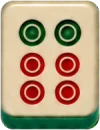
Two players want one tile
- A win beats everything.
- Pong or kong beats chow.
- Two possible winners: nearest in turn wins.
That rule is the head bump. Cantonese: 截糊, zit wu. Some tables let both win instead.
Exposed and concealed
Claimed sets are exposed. A hand without claims is concealed. Concealed wins score 1 extra fan.
Kongs and replacement tiles
A kong counts as one set. After declaring it, draw a replacement. It comes from the back end.
| Kong | How you make it | Counts as |
|---|---|---|
| Exposed kong | Hold three. Claim the fourth. | Exposed |
| Concealed kong | Hold three. Draw the fourth. | Concealed |
| Added kong | Exposed pong. Draw the fourth. | Exposed |
Lay a concealed kong down too. It still counts as concealed.
An added kong can be robbed. Someone may need that fourth tile. They win with it. That scores 1 fan.
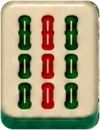
Flowers and seasons
- Draw a flower or season.
- Place it face up beside you.
- Draw a replacement from the back.
- Continue your turn.
Bonus tiles stay outside your hand. They add fan when you win.
| Seat | Own flower | Own season |
|---|---|---|
| East | 1, plum | 1, spring |
| South | 2, orchid | 2, summer |
| West | 3, chrysanthemum | 3, autumn |
| North | 4, bamboo | 4, winter |
- Each own flower or season: 1 fan.
- All four flowers: 2 fan.
- All four seasons: 2 fan.
- No bonus tiles at all: 1 fan.
Flower fan doesn’t count toward minimum.
Winning a hand
You need four sets, one pair. You also need the minimum fan.
| Win | Chinese | Winning tile |
|---|---|---|
| Self-draw | 自摸 (zi mo) | Drawn from the wall |
| On a discard | 食糊 (sik wu) | Anyone’s discard |
- Call the win.
- Lay your whole hand face up.
- Count the fan together.
- Collect payment.
One tile from winning? Your hand is ready. Cantonese: 叫糊, giu wu.
Some hands break the usual shape. Thirteen Orphans is one. It scores the limit.

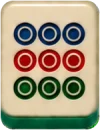
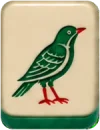
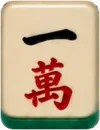
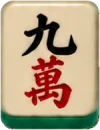
All winning hands: mahjong winning hands.
Minimum fan
Hand value is counted in fan. Cantonese: 番, faan. Common Hong Kong minimum: 3 fan. Casual tables often use 0–1. Agree before you start.
Common fan values:
| Pattern | Fan |
|---|---|
| Self-draw | 1 |
| Concealed hand | 1 |
| All chows | 1 |
| Each dragon pong | 1 |
| Seat wind pong | 1 |
| Prevailing wind pong | 1 |
| All pongs | 3 |
| Mixed one suit | 3 |
| Pure one suit | 7 |
| Limit hands | 10 |
The limit is 10 fan. Full list: mahjong scoring.
Who pays
Fan converts to base points.
| Fan | Base points |
|---|---|
| 3 | 8 |
| 4 | 16 |
| 5 | 24 |
| 6 | 32 |
| 7 | 48 |
| 8 | 64 |
| 9 | 96 |
| 10 or more | 128 |
| Win | Who pays | How much |
|---|---|---|
| On a discard | The discarder only | 2 × base |
| Self-draw | All three others | Base each |
The dealer pays or wins? Double that share.
Example
- South wins on West’s discard.
- The hand is 4 fan.
- Base is 16.
- West pays 32.
- East and North pay nothing.
Had South self-drawn, it’s 5 fan. Base is 24. West and North pay 24. East, the dealer, pays 48.
This is one common table. Payouts vary. More: fan to points.
A drawn hand
The wall runs out. Nobody has won. The hand is a draw. Cantonese: 流局, lau guk. Nobody pays.
In these rules, the deal passes. Many tables keep the dealer instead.
Rounds and the game’s end
- Dealer wins: they deal again.
- Someone else wins: deal passes right.
- Every player deals at least once.
- Then the prevailing wind changes.
- Order: East, South, West, North.
- Four rounds make a full game.
A full game is 16+ hands. Many casual games play one round. Most points at the end wins.
House rules to agree first
- Minimum fan.
- Fan limit.
- Payout table and stakes.
- Dealer bonus or not.
- Dealer after a draw.
- One or several winners.
- Number of rounds.
Other styles of mahjong: types of mahjong. Tactics: mahjong strategy. Terms: glossary.
FAQ
How do you play mahjong?
Draw a tile. Discard a tile. Claim useful discards. Build four sets and a pair. Call the win.
How many tiles per hand?
13 tiles. A winning hand has 14. Each kong adds one more.
Who goes first in mahjong?
The dealer, East. They start with 14 tiles. They discard first.
Which direction does play go?
Counterclockwise. Play passes to your right.
Can you chow from anyone?
No. Only from your left neighbor. Pong and kong work from anyone. So does a win.
What beats a pong?
Only a win. A pong beats a chow.
What if nobody wins?
The hand is a draw. Nobody pays.
What is fan in mahjong?
Fan is a hand’s value. More fan, bigger payout. See scoring.