
Types of mahjong
Mahjong has many regional styles. All share the same core. The rules and scoring differ.
What all styles share
- Four players at a square table.
- Suits of dots, bamboo and characters.
- Suit tiles numbered 1 to 9.
- Four copies of each suit tile.
- Draw a tile, then discard one.
- Sets are pongs and kongs. Most add chows.
- A pong is three identical tiles. A chow is a run.
- First complete hand wins.
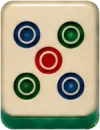
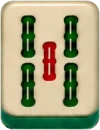
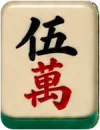
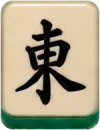
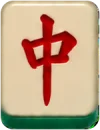
Scoring and extras differ most. See the tile guide.
Comparison table
| Style | Tiles | Hand | Scoring | Special features |
|---|---|---|---|---|
| Hong Kong | 144 | 13 | Fan (faan) | Minimum fan. Fan limit. |
| Japanese riichi | 136 | 13 | Han and fu | Riichi call. Dora. Furiten. |
| Chinese Official | 144 | 13 | 81 scoring patterns | 8-point minimum. |
| Taiwanese | 144 | 16 | Tai | Five sets and a pair. |
| American | 152 | 13 | Fixed hands on a card | Jokers. Charleston. Yearly card. |
| Singapore and Malaysian | 148 | 13 | Tai | Four animal tiles. |
| Sichuan | 108 | 13 | Varies by table | Suits only. No chows. |
Hand means tiles held before drawing. A winning hand has one more.
Hong Kong mahjong
Also called Cantonese mahjong. Chinese name: 麻雀 (maa zoek).
- 144 tiles, including eight bonus tiles.
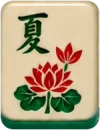
- Bonus tiles: four flowers, four seasons.
- Hands score in fan (番).
- Many tables require 3 fan.
- Many tables cap hands at 10.
- Payment rises steeply with fan.
- House rules vary on these numbers.
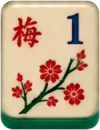
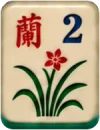
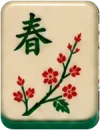
Full rules: how to play. Scoring: fan table.
Japanese riichi mahjong
The main style in Japan.
- 136 tiles. No flowers or seasons.
- Many tables use three red fives.
- Red fives count as bonus tiles.
- You need at least one yaku.
- A yaku is a scoring pattern.
- Score uses han and fu.
- Riichi: declare a ready closed hand.
- Dora: indicated tiles add han.
- Furiten: limits winning on discards.
- Players start with points, often 25,000.
Chinese Official mahjong
Also called Guobiao (國標). Used in Chinese competitions.
- 144 tiles with flowers.
- 81 named scoring patterns.
- A win needs 8 points.
- Flowers score, but not toward 8.
- Published in 1998 in China.
Taiwanese mahjong
- 144 tiles with flowers.
- Each player holds 16 tiles.
- To win: five sets, one pair.
- That is 17 tiles.
- Hands score in tai (台).
- Payment usually adds per tai.
American mahjong
Mostly played in the United States.
- 152 tiles: 144 plus eight jokers.
- Each player holds 13 tiles.
- Winning hands come from a card.
- Publisher: the National Mah Jongg League.
- A new card comes out yearly.
- Jokers stand in for set tiles.
- Jokers never stand in for pairs.
- No chows. Card hands use other patterns.
- Charleston: players pass tiles before play.
Singapore and Malaysian mahjong
- 148 tiles: 144 plus four animals.
- Animals: cat, mouse, rooster, centipede.
- Animals work like bonus tiles.
- Hands score in tai.
- Some bonus tiles pay out instantly.
- Exact payouts vary by table.
Sichuan mahjong
A popular style from western China.
- 108 tiles: the three suits only.
- No winds, dragons or flowers.
- No chows. Pongs and kongs only.
- Winning hands must lack one suit.
- Often, play continues after a win.
China has many other local styles. Rules vary by city.
Which style to learn first
- Learn what your friends play.
- Hong Kong: simple scoring, quick start.
- Riichi: most online players, harder scoring.
- American: needs the current year's card.
- Chinese Official: for competitions.
No preference? Start with Hong Kong. Read the rules.
FAQ
How many mahjong types exist?
There is no fixed number. Most regions have local rules.
What is the most popular mahjong?
No reliable count exists. Each region plays its own. Hong Kong style is widespread.
Is American mahjong different from Chinese?
Yes. It adds jokers and the Charleston. Hands must match the yearly card.
Why 136 tiles in Japanese mahjong?
It drops flowers and seasons.
Can different styles share one set?
Mostly yes. A 144-tile set covers most styles. American needs jokers. Riichi uses red fives.
Next: history or mahjong solitaire.